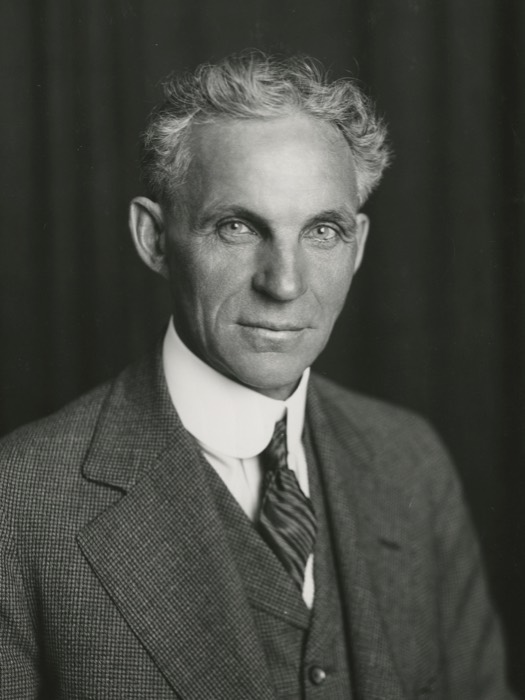
Biography
Henry Ford didn't invent the automobile — but he invented the automobile industry. By introducing the moving assembly line at his Highland Park plant in 1913, Ford cut the time to build a Model T from 12.5 hours to 93 minutes, dropping its price from $850 to $300 and making it affordable to the workers who built it. This was, in its day, as disruptive as anything in the history of modern technology.
Ford founded Ford Motor Company in 1903 with $28,000 from 11 investors. Within a decade, it produced half the cars in America. His River Rouge Complex in Dearborn became the largest integrated factory in the world — iron ore entered one end, finished cars left the other. Ford paid his workers $5 a day, double the industry standard, not purely out of altruism but because he recognized his workers needed to be able to afford his product.
Ford's legacy is deeply complicated. He democratized personal transportation and pioneered industrial capitalism. He also published virulent antisemitic content in his newspaper, the Dearborn Independent — content cited approvingly by Adolf Hitler in Mein Kampf. His technological legacy and moral failures are equally enormous and inseparable.
Did You Know?
Ford refused to take vacations and was suspicious of men who did — believing it indicated a man was either in the wrong job or not working hard enough. He once fired an executive for taking a week off without permission.